Toshirou Okeda (Notojima Aquarium)
‚n2�FSighting and stranding records of whales along the coast and offshore of�@Niigata District, since June 1998.
�›Kazuhiro Minowa (Kashiwazaki City Mus.), Yukihiro Nakamura (Johetsu Aquar.), Akira Aoyagi (Teradomari Aquar.), Junji Shindo (Niigata Aquar.), Yoshiharu Honma (3rd Dept.Anat.,Niigata Univ.Sch.Med.), and Yoshiaki Kogawara(Sado Line Co.)
‚n3�FHistological inspection of the cause of death of a harbor seal, Phoca vitulina, stranded on the wharf of Ishida Fishing Port, Kurobe City, Toyama Prefecture, Sea of Japan.
�›Yoshiharu Honma, Tatsuo Ushiki, Jiro Hitomi and Masaei Takeda (3rd Dept. Anat. Niigata Univ. Sch. Med.), Tsuyoshi Yoshida (East. Branch Toyama Pref. Liver-stock Hyg. Serv. Cent.), and Yasuo Kano (Uozu City Aquar.)
‚n4�FA Report on whaling in Bequia Island, St. Vincent and the Grenadines.
Hisashi Hamaguchi�iSonoda Women's College�j
‚n5�FDolphin hunting/fishing of the Jomon period in Tokyo and Sagami Bay
Yumiko Tanabe (Graduate School of Human and Environmental studies, Kyoto University)
1. Coast of Nemuro to Kushiro, and Hunka bay (Hokkaido Pref.)
2. Coast of Toyama bay (Toyama and Ishikawa Pref.)
3. Coast of Tokyo bay (Chiba, Tokyo, and Kanagawa Pref.)
This paper focuses on the coast of Tokyo bay, and examined how the whale and dolphin were exploited. In Tokyo bay, there were two exploitative situations of those resources. At the recess of the bay, we can find very few remains of whales. On the other hand, we can find many remains of dolphin and whole parts of the body at the entrance of the bay. However, other resources and products, especially obsidian and shell bracelet, show that the Jomon community had a trading system, so I think dolphin and whale resources were also probably divided along their network system.
‚n6�FMesoplodon stejnegeri stranded on the coast of Sekinohana, Noto Peninsula
Shoji Kunimoto (Society of investigating culture thorough math.)
‚n7�FExamination on morphological characteristics and preliminary age determination of the teeth of Stejneger's beaked whale.
�›Kazuo Nagasawa (Yamagata Prefectural Museum) and Tadasu K. Yamada (National Science Museum)
‚n8�FRevising the distribution of Stejneger's beaked whale.
Tadasu K. Yamada (National Science Museum)
‚n9�FFossil whales from the Early Pleistocene Omma Formation in Kanazawa area, Ishikawa Prefecture, Japan.
�›Nobuomi Matsuura (Hakusan Dinosaur Museum of Shiramine) and Kazuo Nagasawa (Yamagata Prefectural Museum)
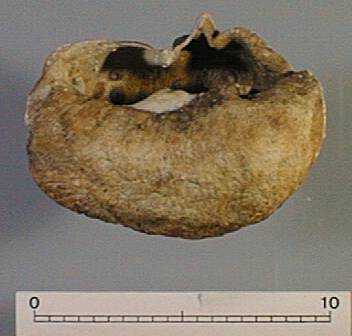
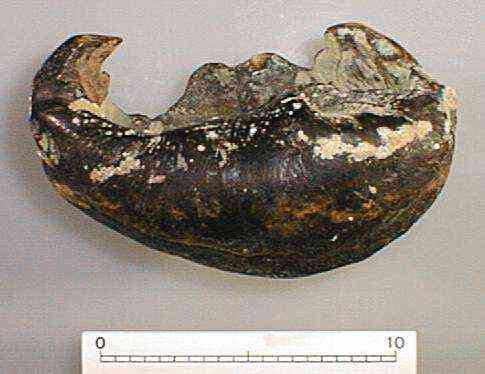
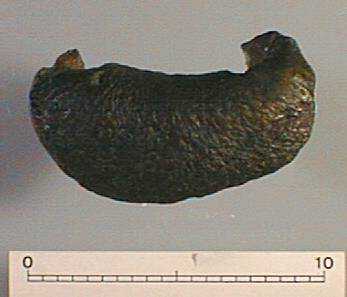
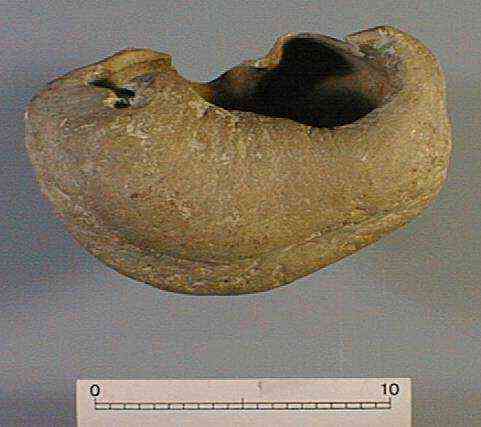
‚n10�FFossil and recent tympanic bullae of mysticetes dredged from the sea bottom off Noto Peninsula and Hokuriku coast, Japan.
�›Tetsuo Hiraguchi (Kanazawa Medical University), Masayuki Oishi (Iwate Prefectural Museum), Nobuomi Matsuura (Hakusan Dinosaur Museum of Shiramine), Tadasu K. Yamada (National Science Museum, Tokyo), and Osamu Sano (Ishikawa Zoo).
 |
 |
 |
 |
| 10th Congress | Special Lecture | Poster Presentation |
| 9th Study Meeting | 11th Congress |